
Columbia County Court Records After a Jail Arrest
After a Columbia County arrest, the jail side and the court side answer different questions. The Columbia County Sheriff's Office may have custody and commitment information, including whether a person was committed to Columbia County Jail, the date of commitment, the reason, and the court that committed the person. The criminal case record is handled through the courts. That court record can include the accusatory instrument, prosecutor-filed or continued charges, appearance dates, judge or court part, warrants, bail or release orders, and disposition.
The Sheriff's record-check page says further disposition information must come from other sources, such as the court, and cannot be released from the Sheriff's Office or jail. Use jail inmate records for the custody and commitment side, and use jail mugshots for booking-photo access questions. Court records after an arrest are about the formal case: what charge is filed, whether it changes, where the next appearance is scheduled, and how the matter ends.
How to Find Columbia County Court Records After an Arrest
The main online starting point is the New York Unified Court System WebCriminal portal. WebCriminal is built for selected criminal cases with future appearance dates. It is not a Columbia County jail roster, and it does not replace a clerk-certified record, but it is the most direct public search path for many active criminal cases after a jail arrest.
- Open WebCriminal and choose the search path that fits the information available.
- Search by case identifier if a case or summons number is known, or search by defendant name using first and last name.
- Use Court Calendar when the court part, judge, or appearance date is the better clue.
- Review the charge list, court, next date, and status carefully, then confirm official records with the court or County Clerk when accuracy matters.
The New York WebCriminal portal shows the Case Identifier, Defendant Name, and Court Calendar search choices documented in the research.
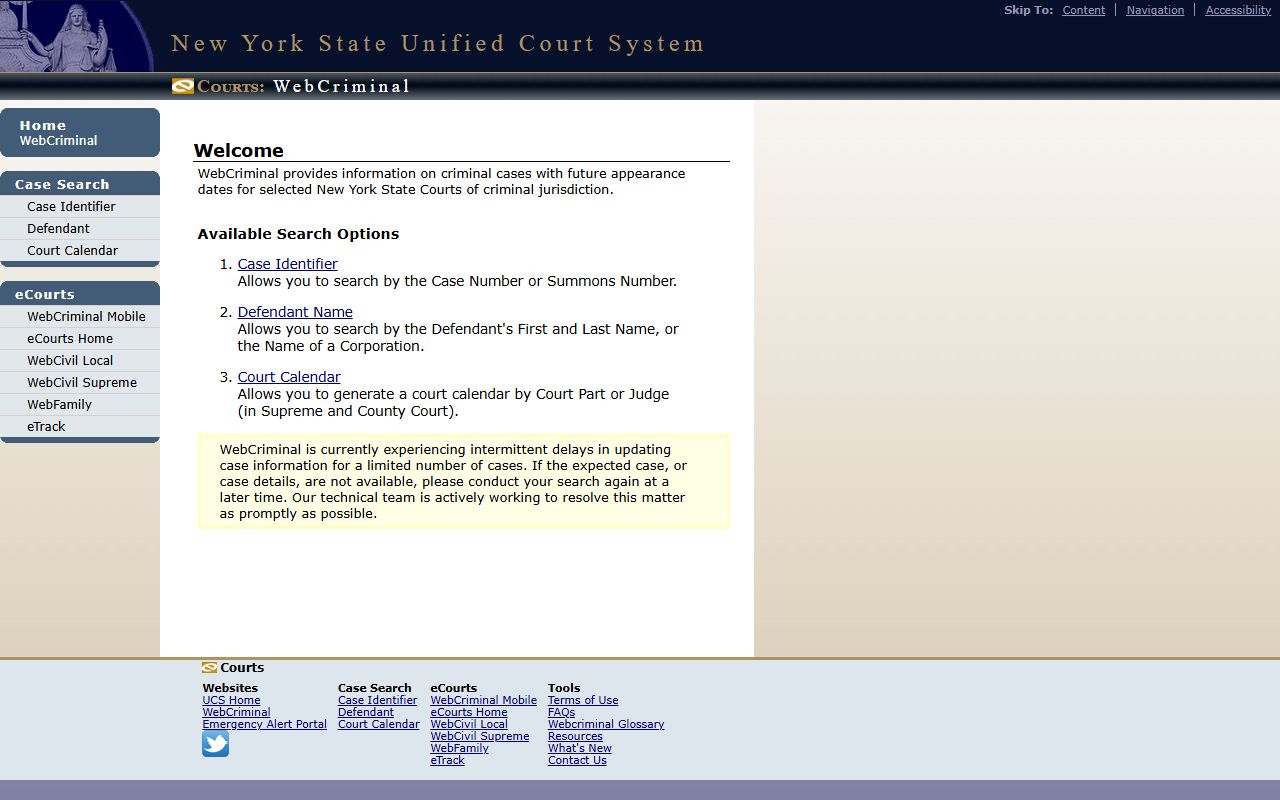
Those search options matter in Columbia County because a person may have only a blotter entry, only a defendant name, or only a future court setting after the jail arrest.
If WebCriminal does not show the expected case, the result is not a final answer. The portal warns that some case information may have update delays. A case also may lack a future appearance date, may need direct clerk contact, may be sealed, or may be outside the public portal's visible coverage. New York Courts says court records can be requested directly from the clerk of the court or the County Clerk that holds the record. The statewide Criminal History Record Search, often called CHRS, is another court-system option and the research notes a published $95 search cost.
How Charges Get Filed After an Arrest: Complaint, Information, and Indictment
An arrest charge can be a starting allegation rather than the final filed charge. The criminal court record begins to take shape when the accusatory instrument is filed and the District Attorney evaluates the case. The Columbia County District Attorney is Hon. Christopher A. Liberati-Conant. The DA's office prosecutes for the People; it does not run the jail, maintain the jail roster, or act as the court clerk.
| Document | Role in the Case | Common Use |
|---|---|---|
| Criminal complaint | Starts or supports a criminal case with factual allegations. | Often used early in local criminal court after arrest. |
| Information | A formal accusatory instrument when legally sufficient. | Common in misdemeanor practice. |
| Indictment | Felony charges voted by a grand jury. | Serious felony cases that move into County Court handling. |
The distinction helps explain why a Sheriff's weekly arrest blotter may list one set of charges while the court record later shows amended, reduced, added, or dismissed charges. A blotter is a public arrest summary; the court file is the official case path.
Charge Status in Court Records After an Arrest
Charge status can change as the case moves from arrest to arraignment, later appearances, plea negotiation, hearing, trial, or dismissal. Columbia County research found weekly arrest blotters listing defendant name, age, arrest date, arrest location, and charges with New York statute references. Those blotters did not show final dispositions, bond amounts, booking numbers, or court dates in the reviewed examples.
| Status | What It Means |
|---|---|
| Pending | The charge remains open and the case has not reached a final court outcome. |
| Amended / Reduced | The filed charge changed, often because the prosecutor or court moved the case to a different offense level or count. |
| Dismissed | The court ended that charge without a conviction on that count. |
| Disposition entered | The charge has a recorded outcome, such as plea, conviction, dismissal, acquittal, or another court result. |
The New York Courts record-help page explains direct court and County Clerk requests, CHRS, and related court-record channels.
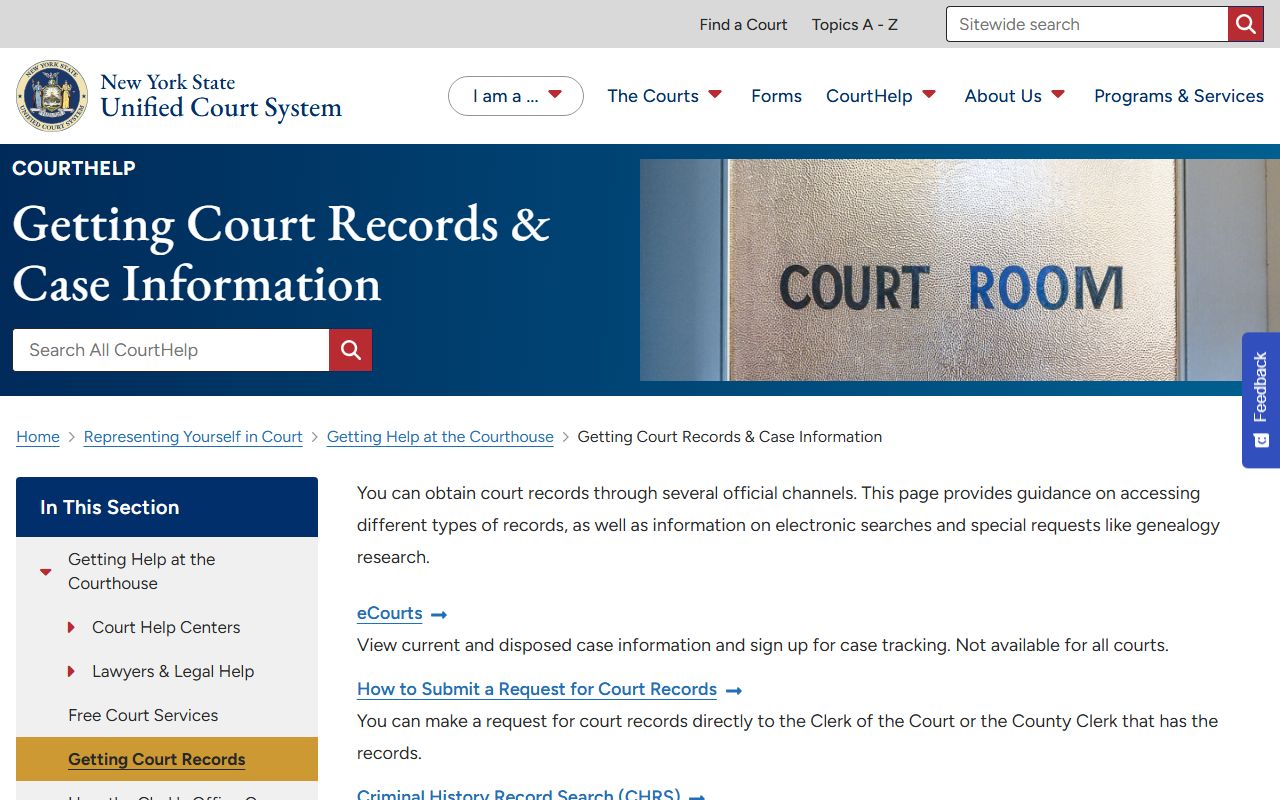
For Columbia County cases that no longer appear in an active WebCriminal search, the clerk route is usually the better official record path.
Bail, Recognizance, and Release After an Arrest
New York Criminal Procedure Law Article 510 governs recognizance, bail, commitment, and securing-order determinations. CPL Article 520 covers bail and bail bonds. In practical Columbia County terms, the court controls the securing order. Columbia County Jail may accept payment when bail has been set, but the jail does not decide whether recognizance, bail, or commitment is legally appropriate.
| Release or Bail Type | How It Works in Columbia County Research |
|---|---|
| Cash bail | The jail information page says bail may be posted at the facility at any time in cash. |
| Certified Western Union money order | The money order must be made payable to the Columbia County Sheriff. |
| Credit-card bail | The jail references GOVernment PAYment EXP / GovPayNet, with payment information obtained at the jail. |
| Bail bond | The jail page says bonding must be arranged through a bail bondsman and the court of jurisdiction. |
| Recognizance | The person is released based on a promise or conditions rather than being held solely for unpaid bail. |
| Commitment or hold | A person may remain in custody because of a court order, another warrant, state-ready status, federal matter, parole issue, or immigration pathway. |
The Sheriff's published jail information does not provide a bail schedule, credit-card fee, payment code, bond percentage, or exact release time after payment. Confirm custody and bail status with Columbia County Jail Reception / Corrections Division at 518-828-3324 or with the court of jurisdiction before assuming payment will produce release.
Warrants That Lead to a Columbia County Arrest
No official Columbia County Sheriff's active warrant search or public warrant roster was located in the research. Weekly arrest blotters do show warrant-related arrests after execution, including entries for arrest warrants, bench warrants, Family Court Act warrant matters, parole or conditional release revocation, and bail jumping. Those blotters document that a warrant arrest occurred; they do not prove that any separate warrant is still active.
For a warrant that has already led to jail commitment, call Columbia County Jail Reception at 518-828-3324 for custody routing. For non-emergency law-enforcement contact, the Sheriff's 24-hour Communications Center is 518-828-3344. For a bench warrant or case-specific warrant, the issuing court is the key source. WebCriminal may show public future-date case activity, but VINE is for custody notification after a person is in jail or prison, not for searching active warrants.
Charges vs. Convictions
An arrest and charge are not the same as a conviction. A Columbia County arrest blotter may list the charge alleged by law enforcement. The court record later shows whether the charge was filed, changed, dismissed, resolved by plea, tried, or otherwise disposed. A conviction exists only after a guilty plea, verdict, or other qualifying final court outcome.
| Charge | Conviction | |
|---|---|---|
| Stage | Accusation or filed count after arrest. | Final court outcome after plea or verdict. |
| Meaning | Shows what is alleged or prosecuted. | Shows legal responsibility for the offense. |
| Where to verify | WebCriminal, clerk record, or prosecutor/court filings. | Official court disposition, clerk record, or CHRS. |
Sealed vs. Expunged Arrest Records
New York public access starts with Public Officers Law Article 6, the Freedom of Information Law, then applies exemptions and privacy rules in sections 87 and 89. Some court and arrest records may be sealed or restricted by court order or statute. The research did not identify a Columbia County-specific expungement process for ordinary jail records, so the safer distinction is between records hidden from public view and records that are destroyed or treated as not publicly available under a separate legal rule.
| Sealed | Expunged | |
|---|---|---|
| Visibility | Generally removed from ordinary public access. | Destroyed, removed, or treated as not existing for specified purposes where the law allows. |
| Access | Certain courts, agencies, or authorized parties may still have limited access. | Access depends on the specific statute or order. |
| Proof | Use the court order, disposition, or clerk certification. | Use the legal authority or certified record showing the outcome. |
District Attorney and Prosecutor Records
The District Attorneys Association of the State of New York directory lists Hon. Christopher A. Liberati-Conant as Columbia County District Attorney, at 325 Columbia Street, Suite 260, Hudson, NY 12534. The directory lists phone 518-828-3414, fax 518-828-8491, and districtattorney@columbiacountyny.gov.
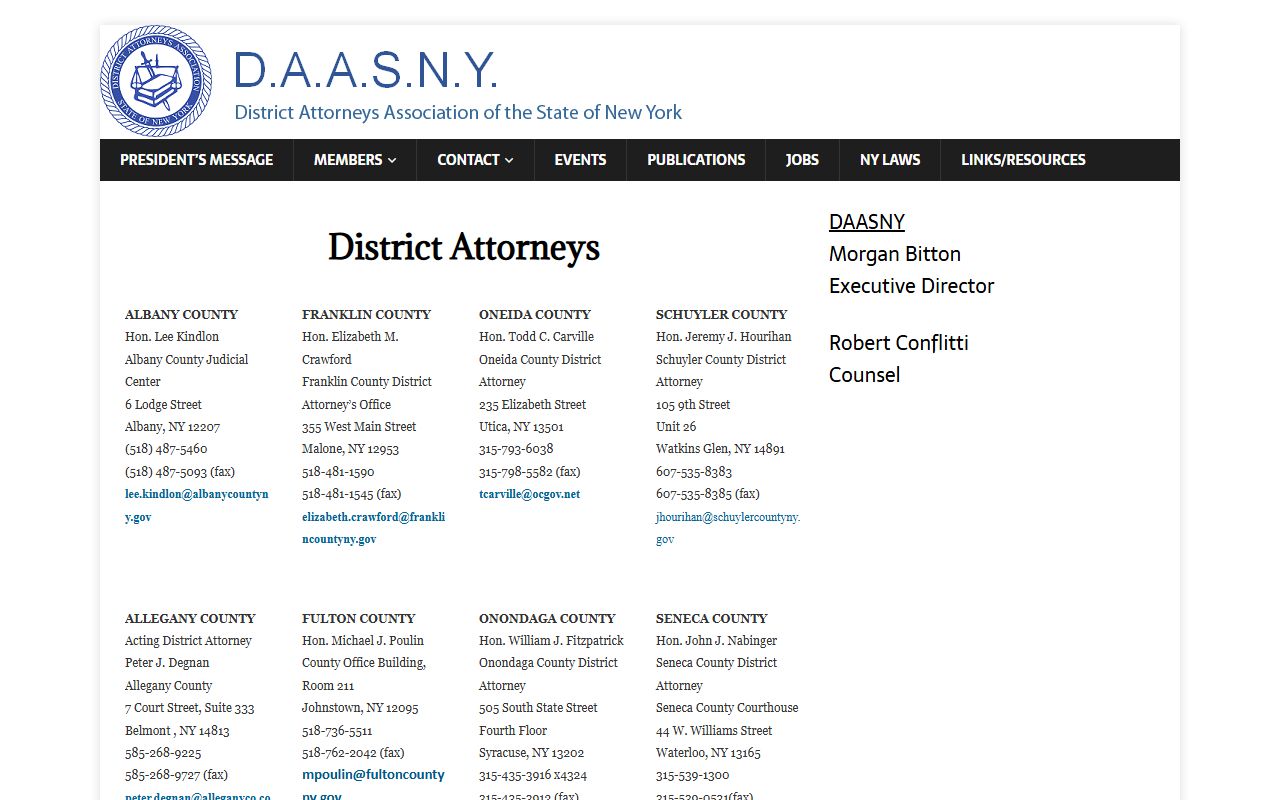
The DA contact is useful for identifying the prosecutor's office, but formal case activity still belongs in WebCriminal, the court clerk's records, the County Clerk's records, or CHRS depending on the record sought.
Background Check Considerations
Public court lookups and clerk requests are not the same as employment, tenant, credit, or insurance screening. Court records after a jail arrest can be incomplete, delayed, sealed, or later changed by disposition. Anyone making a regulated decision must use legally compliant channels and should not rely on casual search results as a consumer report.
Important: Public lookup results are not consumer reports and may not be used for any FCRA-covered purpose.
Restricted Court Records After an Arrest in Columbia County
Some records may be unavailable because they are sealed, restricted by privacy law, tied to juvenile or youthful-offender treatment, connected to an ongoing investigation, or exempt under FOIL. Sheriff's FOIL records and court records also follow different rules. The Sheriff's FOIL process applies to Sheriff's Office records, with written mail or in-person requests and appointment-based inspection Monday through Friday, excluding legal holidays, from 9:00 a.m. to 4:00 p.m. Court dispositions and formal criminal-case records must come from the court, County Clerk, WebCriminal, or CHRS rather than from the jail.